
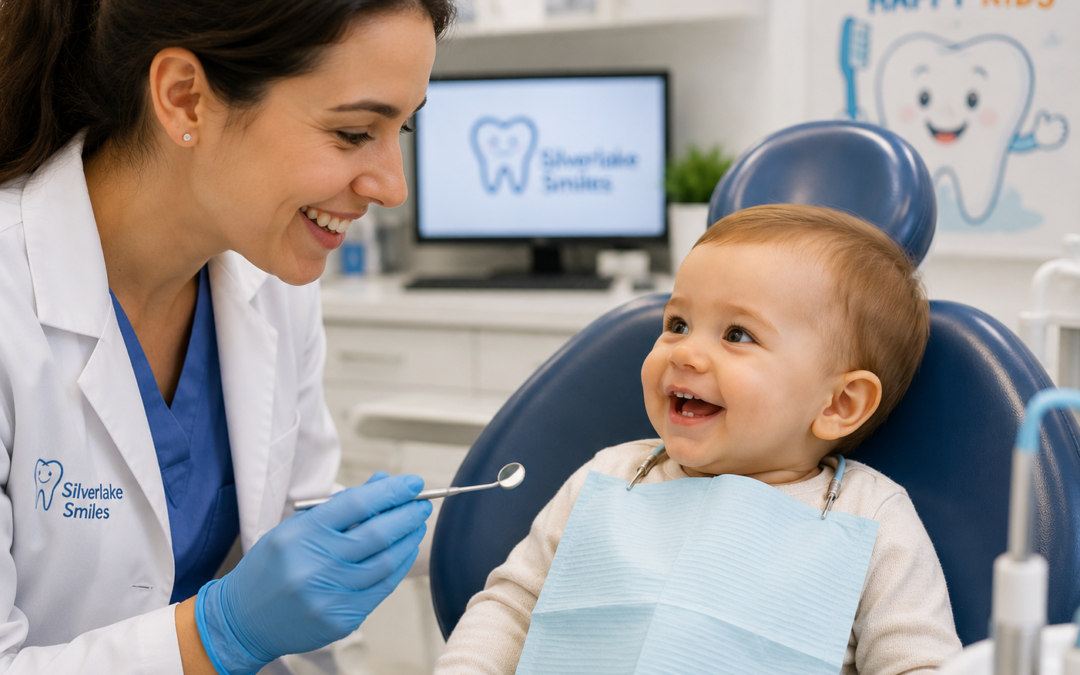
Many parents wait until their child has a full set of baby teeth before scheduling a dental visit, but that delay can allow small oral health concerns to go unnoticed. In fact, according to the CDC’s Oral Health Surveillance Report, more than 1 in 10 children aged 2 to 5 years have at least one untreated cavity in their baby teeth, making early preventive dental care more important than ever.
Scheduling your baby’s first dental appointment early gives your dentist the opportunity to monitor healthy tooth development, identify potential concerns before they become more serious, and provide guidance on caring for your child’s growing smile. It also helps children become familiar with the dental office, making future visits more comfortable.
This guide explains when to schedule your baby’s first dental appointment, what to expect during the visit, and how you can help build healthy oral care habits from the very beginning.
When Should Your Baby Have Their First Dental Appointment?
Many parents are surprised to learn that babies should visit the dentist much earlier than they expect. The American Academy of Pediatric Dentistry (AAPD) recommends scheduling your child’s first dental visit by their first birthday or within six months after the first tooth erupts, whichever comes first. Early visits focus on prevention and education rather than treatment, helping your child get the best possible start for lifelong oral health.
Waiting until your child is older may increase the risk of developing problems that could have been prevented or detected sooner.
Benefits of an early dental visit include:
- Monitoring healthy tooth eruption and jaw development.
- Identifying early signs of tooth decay or other oral health concerns.
- Discussing proper brushing techniques and fluoride use.
- Receiving guidance on teething, thumb sucking, and pacifier habits.
- Helping your child become comfortable with visiting the dentist.
Many first-time parents also have questions about feeding habits, teething discomfort, and oral hygiene. Your baby’s first dental appointment is the perfect opportunity to discuss these topics with your dentist and receive personalized recommendations.
Why Baby Teeth Matter More Than You Think
Since baby teeth eventually fall out, some parents assume they don’t require much attention. In reality, these primary teeth play an essential role in your child’s growth and development.
Healthy baby teeth help:
- Support proper chewing, allowing children to eat a balanced diet.
- Aid speech development as your child learns to pronounce words clearly.
- Hold space for permanent teeth, reducing the risk of alignment issues later.
- Guide healthy jaw and facial development during early childhood.
- Build confidence by supporting a healthy, pain-free smile.
Baby teeth are also vulnerable to cavities. Untreated decay can cause discomfort, affect eating and sleeping, and may even influence the health of the permanent teeth developing beneath them.
Scheduling a baby’s first dental appointment early allows your dentist to identify concerns before they progress and helps establish preventive habits that can benefit your child for years to come.
What Happens During Your Baby’s First Dental Appointment?
A baby’s first dental appointment is typically much simpler than many parents expect. The visit is designed to introduce your child to the dental office in a calm, friendly environment while giving your dentist in Silver Lake an opportunity to evaluate your child’s oral health and development.
Instead of focusing on treatment, the appointment centers on prevention, education, and helping parents establish healthy habits from the very beginning. Most first visits are relatively short, allowing your baby to become familiar with the sights, sounds, and people they’ll encounter during future appointments.
Reviewing Your Baby’s Medical and Dental History
Every child has unique healthcare needs, so your Silver Lake dentist will begin by reviewing your baby’s medical history and discussing any relevant information with you.
Topics commonly discussed include:
- Your baby’s overall health and any medical conditions.
- Current medications or allergies.
- Pregnancy or birth history may affect oral development.
- Family history of dental concerns.
- Previous injuries involving the mouth or teeth.
Your dentist may also ask questions about your baby’s daily routine, such as:
- When the first tooth appeared.
- Bottle or breastfeeding habits.
- Pacifier or thumb-sucking habits.
- Teething symptoms.
- Oral hygiene routine at home.
Providing accurate information helps your dentist personalize recommendations based on your child’s individual needs.
Examining Your Baby’s Teeth, Gums, and Mouth
Once the discussion is complete, your dentist will perform a gentle examination of your baby’s mouth. The exam is painless and usually takes only a few minutes.
During the examination, your dentist may evaluate:
- The number of erupted teeth.
- Gum health.
- Tongue and soft tissue development.
- Jaw growth.
- Tooth positioning and spacing.
- Signs of abnormal tooth eruption.
- Overall oral development.
Many babies sit comfortably on a parent’s lap during this portion of the visit. A common approach is the “knee-to-knee” examination, where the parent and dentist sit facing one another while the baby rests comfortably between them. This position helps your child feel secure throughout the exam.
Routine dental exams like these establish a baseline for your child’s oral health and allow your dentist to monitor changes as they grow.
Looking for Early Signs of Tooth Decay
Many parents don’t realize that cavities can develop soon after the first tooth erupts. Baby teeth have thinner enamel than permanent teeth, making them more susceptible to decay if plaque, sugary drinks, or prolonged bottle use are not properly managed.
During the examination, your dentist will carefully check for:
- White spots that may indicate early enamel damage.
- Brown or dark areas that could signal tooth decay.
- Plaque accumulation.
- Gum irritation or inflammation.
- Areas that may require closer monitoring during future visits.
Identifying these concerns early often allows families to make simple changes at home before more extensive treatment becomes necessary.
Monitoring Growth and Development
A baby’s first dental appointment is also an opportunity to ensure your child’s teeth and jaws are developing as expected.
Your dentist may evaluate:
- Whether teeth are erupting on schedule.
- Jaw growth and development.
- Bite alignment.
- Spacing between teeth.
- Oral habits that could affect future tooth alignment.
Early monitoring doesn’t mean your child will need orthodontic treatment. Instead, it allows your dentist to recognize developmental concerns sooner and recommend appropriate care if needed later in childhood.
Answering Parents’ Questions
One of the most valuable parts of the visiting a dental clinic in Silver Lake is the opportunity to ask questions. Every baby develops differently, and your dentist can provide guidance based on your child’s specific stage of growth.
Common topics include:
- Teething: What symptoms are normal, and how can you help relieve discomfort?
- Thumb sucking and pacifier use: When do these habits become a concern?
- Bottle feeding: How can bedtime bottles affect oral health?
- Brushing techniques: How should you clean your baby’s teeth and gums?
- Fluoride: How much toothpaste should you use, and when is fluoride recommended?
- Diet: Which foods and drinks best support healthy teeth?
Don’t hesitate to bring a list of questions with you. Your baby’s first dental visit is designed as much for parents as it is for children.
How to Prepare Your Baby for Their First Visit
A little preparation can help make your baby’s first dental appointment a positive experience for both you and your child. While every baby reacts differently, choosing the right time and setting realistic expectations can make the visit much smoother.
Here are a few practical tips:
Schedule Around Your Baby’s Routine
Try to book the appointment when your baby is usually well-rested and fed. Avoid scheduling during regular nap times, as tired or hungry children are often less cooperative.
Bring a Favorite Comfort Item
A familiar blanket, stuffed animal, or favorite toy can help your child feel more secure in an unfamiliar environment.
Feed Your Baby Before the Appointment
Unless your dentist provides different instructions, feeding your baby before the visit can help keep them comfortable and content during the examination.
Stay Calm and Positive
Babies often pick up on their parents’ emotions. Speaking positively about the dentist and remaining relaxed yourself can help your child feel more at ease.
Instead of saying:
- “Don’t be scared.”
- “It won’t hurt.”
Try saying:
- “The dentist is going to count your teeth.”
- “We’re going to make sure your smile is healthy.”
Complete Paperwork Before You Arrive
If possible, complete registration forms in advance. This reduces waiting time and allows you to focus on your baby once you arrive at the office.
Choose a Family-Friendly Dental Practice
A welcoming environment can make a significant difference during your child’s first visit. Practices that offer children’s dentistry are experienced in helping young patients feel comfortable while educating parents about preventive care.
By preparing ahead of time and choosing a supportive dental team in Silver Lake, you can help your child build positive associations with dental care that may last well into adulthood.
Common Mistakes Parents Should Avoid
Parents naturally want the best for their children’s health, but when it comes to oral care, a few common misconceptions can unintentionally increase the risk of cavities and other dental problems. Knowing what to avoid can help protect your child’s smile between visits and make every baby’s first dental appointment the beginning of a lifetime of healthy habits.
Waiting Too Long for the First Dental Visit
One of the most common mistakes is delaying your child’s first dental appointment until they’re two or three years old or until all of their baby teeth have erupted.
Early dental visits allow your dentist to:
- Monitor healthy tooth development.
- Identify concerns before they become more serious.
- Provide guidance tailored to your child’s age.
- Help your child become comfortable in a dental setting.
Scheduling an early visit can make future appointments feel more familiar and less intimidating.
Putting Your Baby to Bed with a Bottle
Milk, formula, and juice all contain natural or added sugars that can remain on your baby’s teeth while they sleep. During sleep, saliva production decreases, allowing those sugars to stay in contact with the teeth for longer periods.
Over time, this can increase the risk of early childhood cavities.
If your baby needs a bedtime bottle, water is generally the safest option. If you have questions about nighttime feeding and oral health, discuss them during your baby’s first dental appointment.
Assuming Baby Teeth Don’t Need Much Care
Since baby teeth eventually fall out, some parents believe they aren’t as important as permanent teeth. In reality, healthy primary teeth support chewing, speech development, and proper spacing for adult teeth.
Ignoring baby teeth may lead to:
- Tooth decay.
- Pain or infection.
- Difficulty eating.
- Premature tooth loss.
- Future alignment concerns.
Preventive care during childhood lays the foundation for long-term oral health.
Skipping Oral Hygiene Before Teeth Appear
Good oral care begins even before the first tooth erupts.
Parents should gently clean their baby’s gums with a soft, damp cloth after feedings to remove bacteria and prepare their child for a regular oral hygiene routine. Once the first tooth appears, it’s time to switch to a soft-bristled infant toothbrush.
Developing these habits early can make brushing a natural part of your child’s daily routine.
Sharing Utensils or Cleaning Pacifiers with Your Mouth
Many parents don’t realize that cavity-causing bacteria can be passed from adults to children through saliva.
To reduce this risk:
- Avoid sharing spoons or forks.
- Don’t clean pacifiers with your mouth.
- Avoid sharing toothbrushes.
- Practice good oral hygiene yourself.
These simple habits can help reduce your child’s exposure to harmful bacteria during their early years.
Caring for Your Baby’s Teeth Between Dental Visits
Daily care at home plays just as important a role as regular dental checkups. Even after your baby’s first dental appointment, maintaining healthy habits helps protect developing teeth and supports long-term oral health.
Here are some tips for caring for your baby’s smile at home:
Clean Gums Before Teeth Erupt
Before the first tooth appears, gently wipe your baby’s gums with a clean, damp washcloth or soft gauze after feedings. This helps remove bacteria and familiarizes your baby with oral care.
Brush Twice a Day
As soon as the first tooth erupts, brush twice daily using a soft-bristled infant toothbrush.
General recommendations include:
- A smear (rice-sized amount) of fluoride toothpaste for children younger than 3 years.
- Gentle brushing for about two minutes.
- Paying attention to the gumline and all tooth surfaces.
Encourage Healthy Eating Habits
A balanced diet supports healthy teeth just as much as it supports overall growth.
Try to:
- Offer fruits and vegetables as snacks.
- Encourage drinking water throughout the day.
- Limit sugary beverages and sticky snacks.
- Avoid frequent sipping on juice or sweetened drinks.
Healthy eating habits can lower the risk of cavities while supporting overall development.
Establish a Consistent Routine
Children thrive on routine. Brushing every morning and before bedtime helps establish habits that become easier to maintain as they grow older.
Parents should continue assisting with brushing until children develop the coordination to brush effectively on their own.
Schedule Regular Dental Checkups
Routine preventive visits allow your dentist to monitor tooth development, evaluate oral health, and answer new questions as your child grows.
Following your child’s baby’s first dental appointment, your dentist will recommend a schedule for future dental exams based on their individual needs.
Signs Your Baby Should See a Dentist Sooner
Although routine preventive visits are important, certain symptoms may require an earlier dental evaluation.
Contact your dentist if you notice:
- White, brown, or black spots on your baby’s teeth.
- Swollen, red, or bleeding gums.
- A chipped, cracked, or injured tooth.
- Persistent mouth sores.
- Difficulty eating due to mouth discomfort.
- Teeth that appear to erupt abnormally.
- Delayed tooth eruption that concerns you.
Prompt evaluation can help identify the cause of these symptoms and prevent small issues from becoming more serious.
If you’re ever unsure whether a symptom is normal, it’s always best to contact your dentist. Early evaluation provides peace of mind and helps ensure your child’s smile continues developing as expected.
Choosing the Right Dentist for Your Baby
Your baby’s first dental experience can shape how they feel about dental visits for years to come. Choosing a dental practice that emphasizes preventive care, gentle communication, and a welcoming environment can help your child develop positive associations with oral healthcare from an early age.
When selecting a dentist for your child, consider the following factors:
Experience Treating Young Children
Babies and toddlers have unique oral health needs that differ from those of older children and adults. A dentist experienced in children’s dentistry understands how to perform gentle examinations, monitor oral development, and educate parents on age-appropriate dental care.
A Comfortable, Family-Friendly Environment
Your child’s first appointment should feel welcoming rather than overwhelming. A family-oriented dental office helps young patients become familiar with the dental setting at their own pace, making future visits less intimidating.
A Focus on Preventive Care
Prevention is one of the most valuable aspects of early dental care. Look for a practice that emphasizes education, routine dental exams, and personalized recommendations to help prevent cavities before they develop.
Modern Dental Technology
Technology can improve both the accuracy of diagnoses and the overall patient experience. Modern imaging and diagnostic tools help dentists evaluate developing teeth while making appointments more efficient and comfortable.
Clear Communication with Parents
A great children’s dentist in Silver Lake doesn’t just examine your child’s teeth but also takes the time to answer your questions and explain every step of your child’s oral development.
Whether you have concerns about brushing, fluoride, thumb sucking, teething, or nutrition, you should feel comfortable discussing them during every visit.
Why Families Choose Silverlake Smiles
At Silverlake Smiles, we believe every child deserves a positive start to lifelong oral health. Our team provides gentle, patient-centered care while partnering with parents to build healthy habits that support growing smiles.
Families trust us because we offer:
- A welcoming environment for children and parents.
- Personalized preventive care for every stage of development.
- Gentle children’s dentistry focused on education and comfort.
- Modern dental technology supports accurate diagnosis and treatment planning.
- Convenient locations in Silver Lake and South Pasadena.
- Comprehensive dental services that allow your family to receive care in one practice as your child grows.
As your child’s needs change over time, we’re here to support their oral health with preventive care and a wide range of dental services, helping your family maintain healthy smiles for years to come.
Schedule Your Baby’s First Visit
Frequently Asked Questions
1. When should I schedule my baby’s first dental appointment?
The American Academy of Pediatric Dentistry recommends scheduling your baby’s first dental appointment by their first birthday or within six months after their first tooth erupts.
2. How long does a baby’s first dental appointment usually take?
Most first appointments are relatively short, often lasting between 30 and 45 minutes, depending on your child’s needs and how comfortable they are during the visit.
3. What if my baby cries during the appointment?
Crying is completely normal, especially during a first visit to a new environment. Dentists experienced in children’s dentistry understand this and use gentle techniques to help babies feel as comfortable as possible.
4. Should I clean my baby’s gums before teeth come in?
Yes. Gently wiping your baby’s gums with a clean, damp cloth after feedings helps remove bacteria and establishes healthy oral care habits before the first tooth appears.
5. Is fluoride toothpaste safe for babies?
Yes, when used correctly. For children younger than three years old, a smear (about the size of a grain of rice) of fluoride toothpaste is generally recommended. Your dentist can provide guidance based on your child’s needs.
6. Can babies really get cavities?
Yes. Baby teeth can develop cavities soon after they erupt, which is why early oral hygiene and regular dental visits are so important.
7. How often should my child visit the dentist after the first appointment?
Most children benefit from dental checkups every six months, although your dentist may recommend a different schedule depending on your child’s oral health.
8. What should I bring to my baby’s first dental appointment?
Bring your child’s medical information, insurance details if applicable, a list of any medications, and a favorite comfort item such as a blanket or toy.
9. Is thumb sucking harmful to my baby’s teeth?
Thumb sucking is common during infancy. However, prolonged thumb sucking beyond the toddler years may affect tooth alignment and jaw development. Your dentist can monitor the habit during routine visits.
10. What if my baby’s first tooth hasn’t appeared by age one?
Every child develops at a different pace. Even if your baby’s first tooth hasn’t erupted by their first birthday, it’s still a good idea to schedule a dental visit so your dentist can evaluate their oral development and answer any questions you may have.