
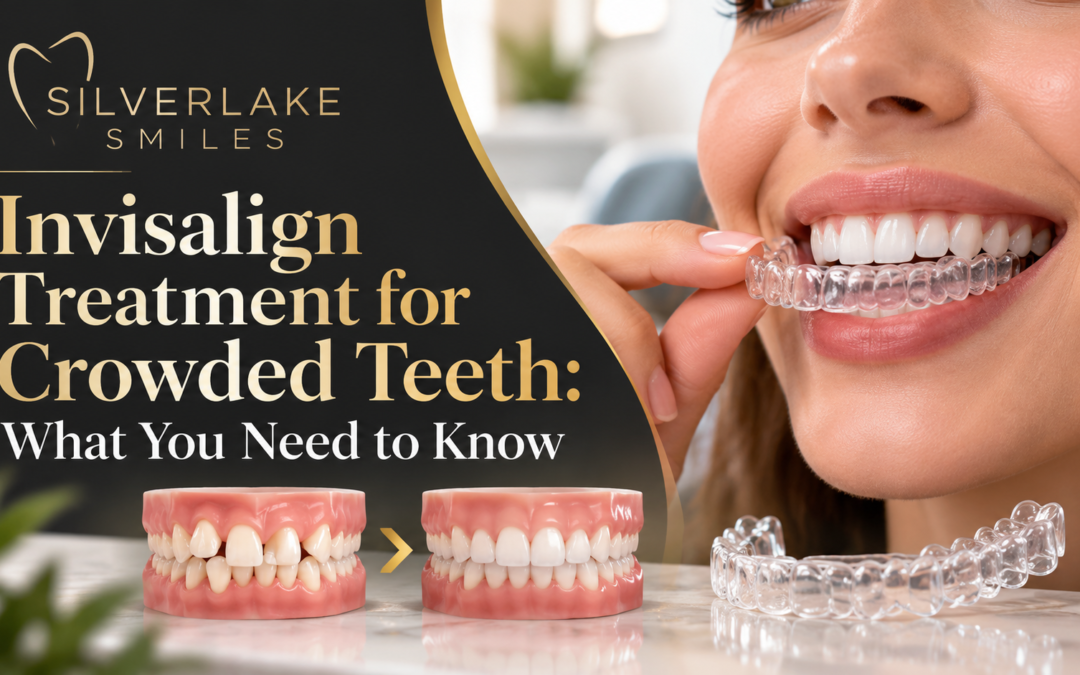
Crowded teeth can affect the appearance of your smile and make everyday oral hygiene more challenging. When teeth overlap or sit too closely together, brushing and flossing may become difficult, allowing plaque to accumulate in areas that are hard to reach. Fortunately, orthodontic treatment can help improve alignment and make teeth easier to clean.
Invisalign treatment for crowded teeth offers an alternative to traditional braces for many patients who want straighter teeth without metal brackets and wires. This system uses a series of clear, removable aligners to move teeth gradually according to an individualized treatment plan. The approach can address several alignment concerns, although suitability depends on the severity of crowding and the movements required.
This guide explains how clear aligners work, what treatment involves, how long it may take, and what to consider before getting started.
What Causes Crowded Teeth?
Crowded teeth develop when there is insufficient space for teeth to align properly within the jaw. Instead of sitting neatly beside one another, teeth may overlap, rotate, or become displaced.
Several factors can contribute to this condition.
Not Enough Space in the Jaw
Some people have jaws that provide limited space for their teeth. When teeth are too large to fit comfortably in the available space, they can overlap and misalign.
The degree of crowding varies. One person may have a single tooth that sits slightly out of position, while another may have several overlapping teeth that affect the overall bite.
Genetics and Jaw Development
Tooth size and jaw shape are influenced partly by genetics. If your family members have crowded teeth, you may have a similar tendency.
Differences between the size of the teeth and the available jaw space can make proper alignment more difficult. A dentist can assess these factors when recommending orthodontic treatment.
Changes in Tooth Position Over Time
Teeth can shift gradually as people age. Some adults notice crowding even after having braces during childhood.
Teeth may also move when retainers are not worn as instructed after orthodontic treatment. This movement can cause previously straight teeth to overlap again.
Early Loss of Baby Teeth
Baby teeth help maintain space for permanent teeth. When a primary tooth is lost earlier than expected, neighboring teeth may shift into the open space and affect the eruption or alignment of permanent teeth.
Early dental care can help monitor these changes. Parents can learn more about children’s dentistry and preventive dental care at Silverlake Smiles.
How Does Invisalign Treatment for Crowded Teeth Work?
Invisalign uses custom-made plastic aligners that fit over the teeth. Each set applies controlled pressure to move selected teeth gradually toward planned positions.
The process begins with an examination to assess tooth alignment, gum health, bite relationships, and overall suitability for orthodontic treatment.
At Silverlake Smiles, the consultation includes photographs and digital scanning with iTero technology. The scan creates a three-dimensional image of the teeth, helping the provider plan treatment and customize the aligners.
The treatment process generally involves the following steps:
- Initial consultation: Your dentist examines your teeth, discusses your concerns, and evaluates whether clear aligners may address your crowding.
- Digital treatment planning: A scan helps the dental team plan the intended tooth movements and customize your aligners.
- Receiving your aligners: You receive a series of trays that are intended to move your teeth in stages.
- Wearing each set: You change aligners according to your treatment plan and wear them for the recommended number of hours.
- Progress appointments: Your dentist checks your progress and determines if any adjustments are needed.
- Retainer use: After active treatment, retainers help maintain your new tooth positions.
Patients generally need to wear their aligners for approximately 20 to 22 hours per day, removing them for meals, drinks other than water, brushing, and flossing. Consistent wear is important because teeth will not move according to plan if the aligners are frequently left out.
Can Invisalign Correct Different Levels of Crowded Teeth?
The suitability of Invisalign treatment for crowded teeth depends on the amount of space available, the position of individual teeth, and the complexity of the bite.
Mild Crowding
Mild crowding may involve a small overlap or one or two teeth that sit slightly out of alignment. Clear aligners can often address these concerns when the required movements fall within the system’s capabilities.
Treatment planning considers how much each tooth needs to move and how the final alignment will affect the bite.
Moderate Crowding
Moderate crowding can involve several overlapping or rotated teeth. Correcting it may require a more detailed treatment plan and additional orthodontic measures.
Depending on the case, a dentist in Silver Lake may recommend attachments, which are small tooth-colored shapes bonded to selected teeth to help the aligners control specific movements. Other techniques may be needed to create enough space.
Severe Crowding
Severe crowding can be more challenging because there may not be enough room to align every tooth without additional treatment.
Some patients may need space created through an orthodontic procedure, while others may benefit from traditional braces or a combined approach. Tooth extraction is sometimes considered, but it is not necessary for everyone with crowded teeth.
A consultation is the best way to determine if clear aligners are suitable for your situation.
6 Benefits of Invisalign for Crowded Teeth
For appropriate candidates, clear aligners offer several practical advantages. The benefits depend on individual needs, treatment complexity, and the patient’s ability to follow the treatment plan.
1. A Less Noticeable Appearance
Invisalign aligners are transparent, making them less noticeable than traditional metal braces in many everyday situations.
This can appeal to adults who interact with clients, attend meetings, or prefer a discreet orthodontic option. Students and teens may also appreciate an alternative to visible brackets and wires.
Although aligners are not completely invisible, their clear appearance can make them less conspicuous during conversations and photographs.
2. A Removable Design
Unlike fixed braces, clear aligners can be removed when eating, drinking beverages other than water, brushing, and flossing.
This flexibility makes it easier to maintain familiar meal routines. It also allows patients to clean their teeth without working around brackets and wires.
The removable design requires responsibility, though. Aligners need to be worn consistently, and frequent removal can interfere with progress.
3. Easier Oral Hygiene
Overlapping teeth can create narrow spaces where plaque and food debris accumulate. Straightening crowded teeth may make certain areas easier to reach during daily cleaning.
Removable aligners also allow patients to brush and floss without orthodontic hardware attached to their teeth.
Good oral hygiene remains essential throughout treatment. Regular dental exams and professional cleanings help monitor tooth and gum health while you work toward better alignment.
4. Customized Treatment Planning
Each Invisalign treatment plan is created for the patient’s specific alignment concerns. Digital scans and treatment planning help the dental team determine how teeth may move throughout the process.
This individualized approach allows the provider to evaluate the intended movements and discuss the expected treatment course before treatment begins.
The planned outcome is an estimate rather than a guarantee. Actual tooth movement can vary, and refinements may be needed during treatment.
5. Fewer Food Restrictions
Traditional braces can require patients to avoid certain hard, sticky, or chewy foods that may damage brackets or wires.
With removable aligners, patients can generally continue eating their usual foods because the trays are removed before meals. It is still important to brush or rinse as directed before putting the aligners back in.
Patients should avoid eating with aligners in place and should not expose them to hot liquids, which can distort the plastic.
6. Flexibility for Busy Routines
Clear aligners may fit well into the routines of working adults, students, and people with active social lives.
Patients can remove the trays for meals and clean them as instructed while continuing with everyday activities. However, the flexibility works best when aligner wear remains consistent.
Appointments are also necessary to monitor progress. Silverlake Smiles reports that Invisalign patients generally return for progress checks approximately every six to eight weeks, although the schedule depends on the individual treatment plan.
How Long Does Invisalign Take to Fix Crowded Teeth?
The duration of Invisalign treatment for crowded teeth depends on the amount of movement needed, the complexity of the bite, and how consistently the aligners are worn.
Mild cases may require less time than cases involving several rotated teeth or more complex bite concerns. Some treatment plans may take several months, while others can take a year or longer.
Treatment plans may range from approximately six to 24 months, depending on individual needs. Your dentist can provide a more relevant estimate after examining your teeth.
Several factors may influence the timeline:
- Severity of crowding: More complex alignment concerns can require additional stages.
- Wear time: Leaving aligners out too frequently may delay progress.
- Biological response: Teeth move at different rates from person to person.
- Treatment refinements: Additional aligners may be needed if teeth do not move exactly as planned.
- Follow-up visits: Regular assessments help your dentist monitor progress and address concerns.
Avoid comparing your timeline directly with another patient’s experience. Your treatment plan should reflect your own dental needs rather than a general estimate.
How Much Does Invisalign for Crowded Teeth Cost?
The cost of Invisalign varies according to treatment complexity, the number of aligners required, the length of treatment, and whether additional procedures are needed.
Mild crowding may require a different treatment plan from severe crowding or crowding combined with bite problems. The total fee may also depend on what follow-up appointments and refinements are included.
When discussing pricing with your dentist, ask:
- What does the quoted treatment fee include?
- Are additional aligners or refinements covered?
- Are there payment plans available?
- Does my dental insurance provide orthodontic benefits?
- Will I need any additional dental procedures before treatment?
You can always request an individualized estimate instead of relying on a generic online price.
Invisalign vs. Braces for Crowded Teeth
Both Invisalign and traditional braces can correct crowded teeth, but they differ in how they work and what patients need to do during treatment.
| Factor | Invisalign | Traditional braces |
| Appearance | Clear, removable trays | Brackets and wires are visible |
| Eating | Remove aligners before meals | Some foods may need to be avoided |
| Oral hygiene | Brush and floss without trays | Clean carefully around brackets and wires |
| Compliance | Requires consistent daily wear | Remains attached to the teeth |
| Suitability | Depends on the movements required | Can address a broad range of orthodontic concerns |
The right option depends on the severity of crowding, bite alignment, oral health, and personal preferences. Some complex cases may be better managed with braces or a combination of orthodontic methods.
A dentist can explain the advantages and limitations of each option after examining your teeth.
How to Care for Your Teeth During Invisalign Treatment
Good daily care helps protect your teeth and gums while you straighten your smile. Because aligners cover the teeth for much of the day, keeping both your mouth and trays clean is important.
Follow these habits throughout treatment:
- Brush twice daily with fluoride toothpaste.
- Floss daily to clean between teeth.
- Remove aligners before eating or drinking anything other than water.
- Clean the trays according to your dentist’s instructions.
- Avoid hot water that could distort the aligners.
- Store trays in their protective case when removed.
- Attend scheduled checkups.
- Wear retainers as instructed after treatment.
If you notice persistent gum bleeding, tooth pain, or irritation from your aligners, contact your dentist. Addressing concerns early can help keep treatment on track.
Is Invisalign Treatment for Crowded Teeth Right for You?
Clear aligners may be appropriate if you have overlapping teeth, mild to moderate crowding, or certain bite concerns. You also need healthy teeth and gums and the ability to follow the recommended wear schedule.
Some patients require treatment for cavities or gum disease before beginning orthodontic care. Others may need additional procedures to create space or address complex alignment problems.
An evaluation helps determine if Invisalign treatment for crowded teeth fits your needs. Your dentist can examine your bite, discuss your goals, explain possible limitations, and recommend alternatives when necessary.
Patients who have previously received braces may also benefit from an assessment if their teeth have shifted. The appropriate approach depends on the current alignment and the reason for the movement.
Get Your Invisalign Treatment at Silverlake Smiles
If crowded or overlapping teeth affect your smile, Silverlake Smiles can help you explore available orthodontic options. Dr. Juliet Ebrahimian, DDS, and her team provide Invisalign services to patients in Silver Lake, Los Angeles, and South Pasadena.
The consultation process includes an examination, photographs, and digital scanning to help the team understand your alignment concerns and plan treatment. Patients from Los Feliz, Atwater Village, Frogtown, and Echo Park can also contact the practice to discuss their needs.
You can learn more about clear aligner treatment at Silverlake Smiles and determine whether an appointment is the right next step.
Schedule Your Invisalign Consultation in Los Angeles
Crowded teeth do not have to be something you ignore. With an individualized orthodontic assessment, you can understand your options, expected treatment timeline, and the steps needed to improve alignment.
Contact Silverlake Smiles to schedule an Invisalign consultation in Silver Lake or South Pasadena. The dental team can assess your teeth, answer your questions, and help you decide on a treatment approach that suits your oral health needs and smile goals.
Frequently Asked Questions
1. Can Invisalign fix crowded teeth?
Yes, Invisalign can correct many cases of crowded teeth, including some mild and moderate cases. Suitability depends on the amount of crowding, the required tooth movements, and the patient’s bite.
2. How long does Invisalign take to correct crowded teeth?
Treatment may take several months or longer than a year, depending on the complexity of the case. Your dentist can estimate the timeline after examining your teeth and developing a treatment plan.
3. Is Invisalign effective for severe crowding?
Some severe cases may be treatable with clear aligners, but others require additional procedures or traditional braces. A professional assessment is necessary to determine the most appropriate approach.
4. Does Invisalign treatment for crowded teeth hurt?
You may feel pressure or mild soreness when starting a new set of aligners. This usually settles as your teeth adjust, but discomfort varies. Contact your dentist if you experience severe or persistent pain.
5. Can crowded teeth become worse with age?
Teeth can shift over time, and crowding may become more noticeable in adulthood. Changes in tooth position, previous orthodontic treatment, and inconsistent retainer use can contribute to this movement.
6. How many hours a day should I wear Invisalign aligners?
Patients are generally instructed to wear their aligners for approximately 20 to 22 hours per day. Follow your dentist’s specific instructions and remove them for meals and oral hygiene.
7. Does Invisalign treatment for crowded teeth require tooth extraction?
Not always. Many cases can be treated without extractions, but severe crowding may require space to be created. Your dentist will evaluate your teeth and bite before recommending an approach.
8. Is Invisalign better than braces for crowded teeth?
Neither option is best for every patient. Invisalign offers removable, less noticeable aligners, while braces may be more suitable for certain complex movements. The decision depends on your clinical needs and preferences.
9. How much does Invisalign cost for crowded teeth?
The cost depends on treatment complexity, duration, and the services included in the plan. Ask your dental provider for a personalized estimate and information about payment options and insurance benefits.
10. Will my teeth become crowded again after Invisalign treatment?
Teeth can shift after orthodontic treatment. Wearing retainers as instructed and attending recommended follow-up visits helps maintain alignment and reduce the risk of crowding returning.